A Framework for Safe OpenClaw Deployment
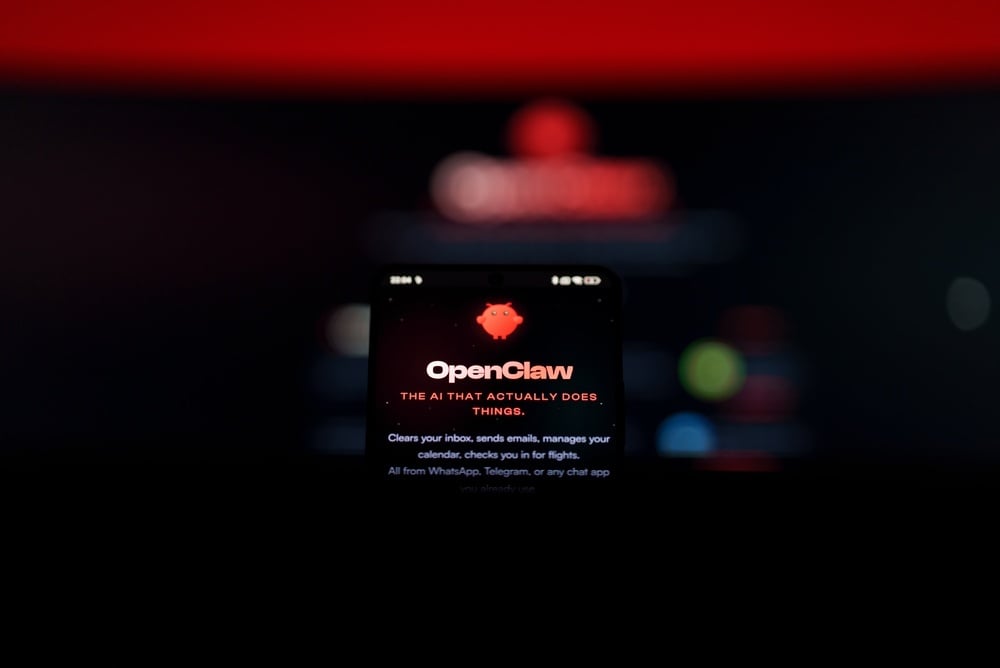
In last week’s post, Why OpenClaw Deployments Demand IAM Governance, we made the case that OpenClaw shouldn’t be treated like software—it should be treated like an employee. We explored how early deployments are already exposing credentials, bypassing access controls, and creating a governance gap that traditional security models weren’t designed to catch. The takeaway was clear: autonomous AI agents introduce a new class of identity risk. This week, we move from why to how. Drawing on emerging guidance from security researchers and lessons from early enterprise adopters, this post outlines a practical framework for deploying OpenClaw safely—one that applies proven IAM principles to govern AI agents before experimentation turns into exposure.
Based on the emerging advice from both security researchers and early adopters, here's a framework for deploying OpenClaw responsibly:
1. Provision a Governed Identity
Create a dedicated identity for the agent within your IAM platform. This identity should:
-
Have a clear owner (sponsor) who is accountable
-
Exist within your organizational directory
-
Be subject to your standard access policies
-
Generate audit logs that flow into your SIEM
2. Establish Resource Boundaries
Rather than connecting OpenClaw to your personal accounts, create dedicated resources:
-
Separate cloud storage accounts with controlled permissions
-
A shared drive or folder specifically for agent collaboration
-
A dedicated communication channel (Telegram group, Slack channel)
-
API keys scoped to specific, limited operations
3. Implement Credential Governance
Store all agent credentials in a managed secrets platform:
-
Never paste API keys into configuration files
-
Use short-lived tokens where possible
-
Enable automatic credential rotation
-
Maintain a governed vault of all credentials the agent can access
4. Deploy in Isolation
Follow the security researcher recommendations for containment:
-
Don’t run OpenClaw on your own system
-
Run OpenClaw in a container with minimal privileges
-
Use network policies to restrict and filter outbound connections
-
Enable sandboxing for command execution
-
Maintain separate development and production deployments
5. Monitor and Review
Treat the agent like a contractor who requires supervision:
-
Review activity logs regularly
-
Set up alerts for sensitive operations
-
Conduct periodic access certifications
-
Document and investigate any anomalies
The Organizational Horizon
It won't be long before employees begin deploying OpenClaw-style agents in the workplace, whether officially sanctioned or not. Shadow AI—like shadow IT before it—will proliferate wherever productivity gains outpace security controls. Forward-thinking organizations should prepare now:
-
Develop AI agent governance policies that define acceptable use, required controls, and accountability structures
-
Extend IAM platforms to support non-human identities with appropriate lifecycle management
-
Train security teams on the unique risks of autonomous AI agents
-
Create sanctioned deployment paths that make it easier to do the right thing than to circumvent controls
The organizations that figure out AI agent governance first will capture the productivity benefits while their competitors deal with the inevitable breaches and compliance failures.
OpenClaw and its successors are a significant milestone in human-AI collaboration. The ability to delegate routine tasks to an autonomous agent that learns your preferences and acts on your behalf is transformative. But transformation without governance is chaos.
The cybersecurity community has spent decades developing frameworks for managing human access to digital systems. These include Single Sign-On, Multi-Factor Authentication, Privileged Access Management, and Zero Trust architectures. We conduct access reviews, monitor anomalies, and revoke credentials when employees depart.
Responsible use of AI agents requires the same rigor. They should have sponsored identities, governed credentials, bounded permissions, and continuous monitoring. They should be treated like what they are: powerful actors in our digital environments who need to be managed. The alternative—users casually handing their personal credentials to autonomous agents running on local machines with shell access—is a security disaster waiting to happen. The early OpenClaw vulnerabilities are just the beginning.
The future of AI assistants is bright. But that future requires us to take identity and access management as seriously for our AI agents as we do for ourselves.
Bryan Christ is an IT professional with almost three decades of industry experience. He has worked for a number of high-profile companies including Compaq, Hewlett-Packard and MediaFire. After serving two years in a fractional CIO role in the Greater Houston area, Bryan shifted into the identity and access management (IAM) arena and has spent the last several years focused on Higher Education.
The author advocates for a governance-first approach to AI agent deployment, emphasizing that the IAM principles we've developed for human employees apply equally—if not more so—to autonomous AI systems.